










































The State of Digital Interventions for Demand Generation in Low- and Middle-Income Countries: Considerations, Emerging Approaches, and Research Gaps
Johns Hopkins Bloomberg School of Public Health (Gibson); World Health Organization, or WHO (Tamrat, Mehl)
"[I]t is important that researchers and practitioners document the details of digital interventions so others can replicate the studies and so we can better understand what elements of digital demand generation approaches do and do not work."
This paper explores the variety of ways in which digital tools have been used to generate awareness of and demand for health commodities and services in low- and middle- income countries (LMICs). It looks at the factors that have contributed to the fact that gaps remain in our understanding of which interventions are effective and what is necessary to ensure effective deployment. In addition, it offers an overview of emerging approaches aimed at strengthening the potential value of digital demand generation, guidance for documenting specific characteristics of demand generation interventions, and a proposed research agenda.
Digital health interventions for demand generation, as illustrated by several examples as implemented in LMICs provided in the paper, include:
- Untargeted client communication - e.g., the use of short message service (SMS)/text messages and social media platforms that are able to accommodate a large volume of users. This type of mass engagement has been used, for instance, during disease outbreaks by ministries of health to transmit generic messages to notify constituents about a public health threat.
- Client-to-client communication, also known as peer communication - e.g., social media networks, chat groups, and blog communities that enable interaction between people who share common attributes, such as having similar health conditions, demographics, or prescribed treatments. ("By harnessing these empathetic and supportive interactions, client-to-client communication is uniquely positioned to influence behavior change and generate demand.")
- On-demand information services - e.g., websites, helplines, SMS/text-messaging menus, or client applications, among other channels, that rely on individuals to proactively initiate contact with the health system or information service.
- Personal health tracking - e.g., mobile applications, wearables, and sensors used to document and monitor a client's health status.
- Client financial transactions - e.g., mobile-money transfers to assist with out-of-pocket payments incurred by clients when seeking health services.
- Targeted client communication - e.g., postal mail, automated telephone calls, email, and SMS messages with targeted health information sent from the health system. ("[A] growing body of literature has documented the efficacy of digital targeted client communication interventions, particularly through SMS, to improve health system performance and health outcomes in LMICs...")
The paper provides a general overview of 118 studies published between January 1 2010 and October 3 2017 that used digital interventions to generate demand for health interventions. The majority (61%) of these studies used targeted client communication to provide health education or reminders to improve treatment adherence, and the most frequently (27%) studied health condition was HIV/AIDS.
Intervention characteristics that have been found to have some effect on gains in demand generation include:
- Modality - "The increasing use of social media platforms, such as Facebook Messenger and WhatsApp, in LMICs provides a growing user base that supports not only SMS/text-based messaging but also more sophisticated communication content and interactivity, which warrants additional research."
- Directionality - "Interactive, or two-way, messaging may be preferred by implementers, as it allows for an exchange of information between client and provider and also between clients."
- Tailoring - "Although numerous studies have assumed the benefits of tailoring targeted client communication in the design of the intervention, very few studies have sought to assess the added gains in the personalization of client-targeted communication."
- Scheduling - "[T]here may be a minimum threshold for the number of messages to produce an effect as well as a saturation threshold if too many messages are sent."
- Phrasing - "Although it is not clear if the phrasing of messages has had an impact on health-seeking behaviors, it is likely that the phrasing is specific to study populations and health outcomes."
The paper also explores new emergent digital approaches that expand the potential effect of traditional demand generation in terms of personalisation of content and services, continuity of care, and accountability tracking. As is argued here, applying existing frameworks for monitoring and evaluation and reporting, research on emerging approaches will need to consider not only their feasibility but also their effectiveness in achieving demand generation outcomes.
Finally, the paper proposes a research agenda to help guide the field of digital demand generation studies and programmes within a broader health systems strengthening agenda, including establishing and documenting the influence of intervention characteristics within different populations and health domains and examining the long-term effects and cost-effectiveness of digital demand generation interventions, as well as equity in access to such interventions. (See also Related Summaries, below, for WHO guidance on monitoring and assessing digital interventions.)
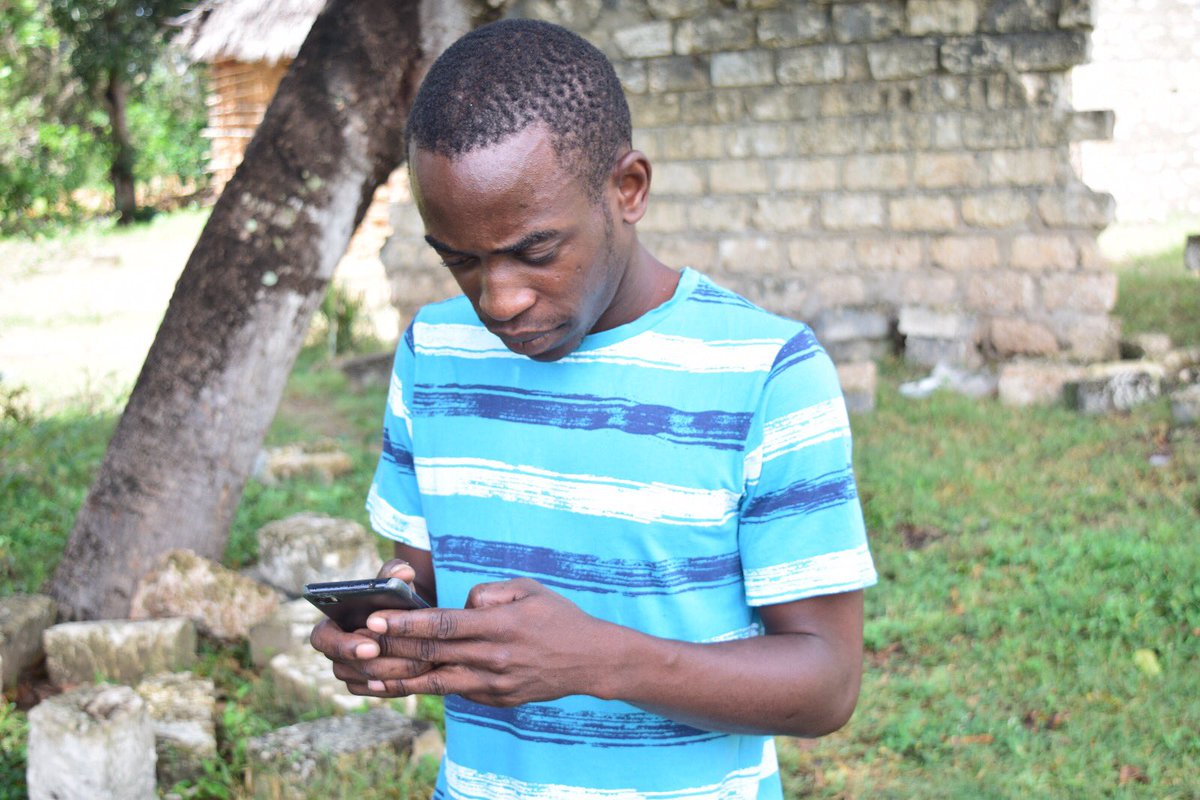
Global Health: Science and Practice October 2018, 6(Supplement 1):S49-S60; https://doi.org/10.9745/GHSP-D-18-00165. Image credit: WHO via Twitter
- Log in to post comments